Wednesday, May 25, 2022

Yet another misplaced modifier, this one affecting a cast of MILLIONS.

I have an endless supply of these revision-needed sentences, so I'm going to continue to harangue you. :) 


In longer sentences, you will often have several nouns and several verbs, and some of those will have modifying words, phrases, and clauses. Here's one:

Let's not elect high-level government officials who make decisions for millions who have clear ethical issues. 

Question: WHO HAS THE ETHICAL ISSUES?

The officials, presumably. Or maybe it's "the millions"? 

The verbs don't help. Sometimes the "number" (singular or plural) form of a noun can help us figure it out--

If this were:

Let's not elect A high-level government OFFICIAL who MAKES decisions for millions who HAS clear ethical issues. 

Because "a" and "official" and  "makes" and "has" all mean "one person", we can assume that "has clear ethical issues" refers to the "official". 

We can assume... but the writer shouldn't rely on OUR superior understanding of subject-verb agreement to make sense of the sentence. Better would be:

Let's not elect A high-level government OFFICIAL who HAS clear ethical issues who MAKES decisions for millions.

Now if you read that aloud, you would probably mentally edit that to get rid of the second "who" and maybe the first too--

Let's not elect A high-level government OFFICIAL with clear ethical issues to MAKE decisions for millions.

Here we reduce a clause {"who has clear ethical issues" and "who makes decisions" are both relative clauses with a subject --who-- and a verb) to a phrase ("with" starts a prespositional phrase here, and "to make" starts an infinitive phrase). Reducing the, shall we call it "syntactical complexity", of a modifier usually makes the sentence clearer, as it's more obvious what the main subject/verb unit is (Let's not elect). 

So... back to the original sentence. 

Let's not elect high-level government officials who make decisions for millions who have clear ethical issues. 

The quickest fix is moving the "who have" clause to be adjacent to the word it modifies:

Let's not elect high-level government officials who have clear ethical issues 

Then again we are going to have to go with an infinitive (to make) because now those stacked "whos" don't work--

Let's not elect high-level government officials with clear ethical issues to make decisions for millions.

I'm not pretending this is a great sentence. But it's a grammatical sentence that clearly conveys exactly what the author meant.

Another episode of  read and revise like an editor. :) 


Thursday, May 19, 2022

Rules, Rules, Can I Please Break Them?

Rules, Rules, Can I Please Break Them? 


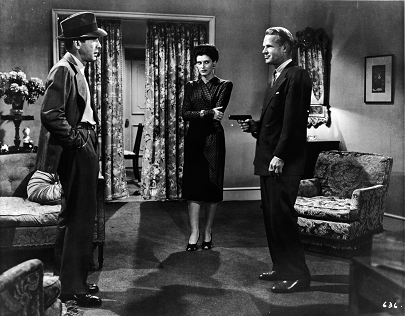
Okay, one more guy making rules! This is Raymond Chandler's hard-won wisdom on plotting the crime:

1) It must be credibly motivated, both as to the original situation and the dénouement.

2) It must be technically sound as to the methods of murder and detection.

3) It must be realistic in character, setting and atmosphere. It must be about real people in a real world.

4) It must have a sound story value apart from the mystery element: i.e., the investigation itself must be an adventure worth reading.

5) It must have enough essential simplicity to be explained easily when the time comes.

6) It must baffle a reasonably intelligent reader.

7) The solution must seem inevitable once revealed.

8) It must not try to do everything at once. If it is a puzzle story operating in a rather cool, reasonable atmosphere, it cannot also be a violent adventure or a passionate romance.

9) It must punish the criminal in one way or another, not necessarily by operation of the law…. If the detective fails to resolve the consequences of the crime, the story is an unresolved chord and leaves irritation behind it.

10) It must be honest with the reader.


And then, just for fun, some great Chandler quips (no, not the Chandler from Friends. This is the one he's probably named for): 

The French have a phrase for it. The bastards have a phrase for everything and they are always right. To say goodbye is to die a little.
  - The Long Goodbye

From 30 feet away she looked like a lot of class. From 10 feet away she looked like something made up to be seen from 30 feet away.
- The High Window

Dead men are heavier than broken hearts.
– The Big Sleep

I needed a drink, I needed a lot of life insurance, I needed a vacation, I needed a home in the country. What I had was a coat, a hat and a gun. I put them on and went out of the room.- Farewell, My Lovely

She gave me a smile I could feel in my hip pocket.
- Farewell, My Lovely

I'm an occasional drinker, the kind of guy who goes out for a beer and wakes up in Singapore with a full beard.
- Philip Marlowe’s Guide To Life

Some days I feel like playing it smooth. Some days I feel like playing it like a waffle iron. - Trouble Is My Business

She smelled the way the Taj Mahal looks by moonlight.
- The Little Sister

I knew one thing: as soon as anyone said you didn’t need a gun, you’d better take one along that worked. - The Long Goodbye


Hard-bitten. Hard-won. Heart-broke wisdom. 


S.S. Van Dine's 20 Rules for Detective Stories


THE DETECTIVE story is a kind of intellectual game. It is more — it is a sporting event. And for the writing of detective stories there are very definite laws — unwritten, perhaps, but none the less binding; and every respectable and self-respecting concocter of literary mysteries lives up to them. Herewith, then, is a sort Credo, based partly on the practice of all the great writers of detective stories, and partly on the promptings of the honest author’s inner conscience. To wit:

1. The reader must have equal opportunity with the detective for solving the mystery. All clues must be plainly stated and described.

2. No willful tricks or deceptions may be placed on the reader other than those played legitimately by the criminal on the detective himself.

3. There must be no love interest. The business in hand is to bring a criminal to the bar of justice, not to bring a lovelorn couple to the hymeneal altar.

4. The detective himself, or one of the official investigators, should never turn out to be the culprit. This is bald trickery, on a par with offering some one a bright penny for a five-dollar gold piece. It’s false pretenses.

5. The culprit must be determined by logical deductions — not by accident or coincidence or unmotivated confession. To solve a criminal problem in this latter fashion is like sending the reader on a deliberate wild-goose chase, and then telling him, after he has failed, that you had the object of his search up your sleeve all the time. Such an author is no better than a practical joker.

6. The detective novel must have a detective in it; and a detective is not a detective unless he detects. His function is to gather clues that will eventually lead to the person who did the dirty work in the first chapter; and if the detective does not reach his conclusions through an analysis of those clues, he has no more solved his problem than the schoolboy who gets his answer out of the back of the arithmetic.

7. There simply must be a corpse in a detective novel, and the deader the corpse the better. No lesser crime than murder will suffice. Three hundred pages is far too much pother for a crime other than murder. After all, the reader’s trouble and expenditure of energy must be rewarded.

8. The problem of the crime must he solved by strictly naturalistic means. Such methods for learning the truth as slate-writing, ouija-boards, mind-reading, spiritualistic se’ances, crystal-gazing, and the like, are taboo. A reader has a chance when matching his wits with a rationalistic detective, but if he must compete with the world of spirits and go chasing about the fourth dimension of metaphysics, he is defeated ab initio.

9. There must be but one detective — that is, but one protagonist of deduction — one deus ex machina. To bring the minds of three or four, or sometimes a gang of detectives to bear on a problem, is not only to disperse the interest and break the direct thread of logic, but to take an unfair advantage of the reader. If there is more than one detective the reader doesn’t know who his codeductor is. It’s like making the reader run a race with a relay team.

10. The culprit must turn out to be a person who has played a more or less prominent part in the story — that is, a person with whom the reader is familiar and in whom he takes an interest.

11. A servant must not be chosen by the author as the culprit. This is begging a noble question. It is a too easy solution. The culprit must be a decidedly worth-while person — one that wouldn’t ordinarily come under suspicion.

12. There must be but one culprit, no matter how many murders are committed. The culprit may, of course, have a minor helper or co-plotter; but the entire onus must rest on one pair of shoulders: the entire indignation of the reader must be permitted to concentrate on a single black nature.

13. Secret societies, camorras, mafias, et al., have no place in a detective story. A fascinating and truly beautiful murder is irremediably spoiled by any such wholesale culpability. To be sure, the murderer in a detective novel should be given a sporting chance; but it is going too far to grant him a secret society to fall back on. No high-class, self-respecting murderer would want such odds.

14. The method of murder, and the means of detecting it, must be be rational and scientific. That is to say, pseudo-science and purely imaginative and speculative devices are not to be tolerated in the roman policier. Once an author soars into the realm of fantasy, in the Jules Verne manner, he is outside the bounds of detective fiction, cavorting in the uncharted reaches of adventure.

15. The truth of the problem must at all times be apparent — provided the reader is shrewd enough to see it. By this I mean that if the reader, after learning the explanation for the crime, should reread the book, he would see that the solution had, in a sense, been staring him in the face-that all the clues really pointed to the culprit — and that, if he had been as clever as the detective, he could have solved the mystery himself without going on to the final chapter. That the clever reader does often thus solve the problem goes without saying.

16. A detective novel should contain no long descriptive passages, no literary dallying with side-issues, no subtly worked-out character analyses, no “atmospheric” preoccupations. such matters have no vital place in a record of crime and deduction. They hold up the action and introduce issues irrelevant to the main purpose, which is to state a problem, analyze it, and bring it to a successful conclusion. To be sure, there must be a sufficient descriptiveness and character delineation to give the novel verisimilitude.

17. A professional criminal must never be shouldered with the guilt of a crime in a detective story. Crimes by housebreakers and bandits are the province of the police departments — not of authors and brilliant amateur detectives. A really fascinating crime is one committed by a pillar of a church, or a spinster noted for her charities.

18. A crime in a detective story must never turn out to be an accident or a suicide. To end an odyssey of sleuthing with such an anti-climax is to hoodwink the trusting and kind-hearted reader.

19. The motives for all crimes in detective stories should be personal. International plottings and war politics belong in a different category of fiction — in secret-service tales, for instance. But a murder story must be kept gemütlich, so to speak. It must reflect the reader’s everyday experiences, and give him a certain outlet for his own repressed desires and emotions.

20. And (to give my Credo an even score of items) I herewith list a few of the devices which no self-respecting detective story writer will now avail himself of. They have been employed too often, and are familiar to all true lovers of literary crime. To use them is a confession of the author’s ineptitude and lack of originality. (a) Determining the identity of the culprit by comparing the butt of a cigarette left at the scene of the crime with the brand smoked by a suspect. (b) The bogus spiritualistic se’ance to frighten the culprit into giving himself away. (c) Forged fingerprints. (d) The dummy-figure alibi. (e) The dog that does not bark and thereby reveals the fact that the intruder is familiar. (f)The final pinning of the crime on a twin, or a relative who looks exactly like the suspected, but innocent, person. (g) The hypodermic syringe and the knockout drops. (h) The commission of the murder in a locked room after the police have actually broken in. (i) The word association test for guilt. (j) The cipher, or code letter, which is eventually unraveled by the sleuth.


If you're interested in "golden-age" detective stories, listen to the Great Detectives of Old Radio podcast, which has restored the old radio dramas of SS. Van Dine. 

https://www.greatdetectives.net/detectives/


http://www.openculture.com/2016/02/20-rules-for-writing-detective-stories.html

Ronald Knox: 10 Commandments of Detective Fiction-- Which do you argue with?

Ronald Knox: 10 Commandments of Detective Fiction


Ronald Knox: 10 Commandments of Detective Fiction


Ronald Knox was quite the eclectic fella-- a Roman Catholic priest (so of course he has to compile 10 Commandments), as well as a mystery writer who hung out with Agatha Christie and GK Chesterton in the Detection Club.  He came up with these rules for mysteries, some of which (#5?) are kinda obsolete

  1. The criminal must be someone mentioned in the early part of the story, but must not be anyone whose thoughts the reader has been allowed to follow.
  2. All supernatural or preternatural agencies are ruled out as a matter of course.
  3. Not more than one secret room or passage is allowable.
  4. No hitherto undiscovered poisons may be used, nor any appliance which will need a long scientific explanation at the end.
  5. No Chinese man must figure in the story.
  6. No accident must ever help the detective, nor must he ever have an unaccountable intuition which proves to be right.
  7. The detective must not himself commit the crime.
  8. The detective must not light on any clues which are not instantly produced for the inspection of the reader.
  9. The stupid friend of the detective, the Watson, must not conceal any thoughts which pass through his mind; his intelligence must be slightly, but very slightly, below that of the average reader.
  10. Twin brothers, and doubles generally, must not appear unless we have been duly prepared for them.


 Well, these are fun, anyway! I have another list of TWENTY I'll post later.

Ronald Knox: 10 Commandments of Detective Fiction


Monday, April 25, 2022

Correctly Placing Misplaced Modifiers

 Alas, I constantly edit, even when I'm not being paid for it, the author didn't ask for it, and I can't actually share it. It's just a compulsion that happens as I read, especially news stories that have presumably already been edited. 

And heck, why not share the compulsion here? Maybe someone will learn from it. I do 'revision sessions' sometimes with students, just editing on-screen and explaining as I go, and this misplaced modifier problem is one of the most common and also one of the most easily fixed mistakes.

In a sentence, a "modifier" is a word or phrase or clause which "modifies" or deepens or narrows the meaning of another part of the sentence. The most common modifiers are the one-word adjectives and adverbs which add to the meaning of a noun or verb, like: The girl's outfit proudly proclaimed her Ukrainian heritage.

But often the modifier can be an entire phrase: 

  • The play took place in the old Gem Theater. 
  • He was waiting for the bus to come. 
  • The morning before the party, the dog got sick.

Or the modifier can be an entire clause (with a noun and verb):
  • He didn't notice the shocked silence that fell across the room when he wrote his name on the board.
  • The more you remember, the more you have to forget.
  • --


Some modifiers are "bound"-- that is, they have to be in a particular position, like just before the noun they modify. You know-- The pink dress. (Not --  The dress pink.) These "bound" modifiers are usually single words or short phrases that modify a noun (that is, they are "adjectival," which means "modifies the noun" :). 

Usually, however, modifiers are unbound, especially the phrase and clause ones, and therein lies the problem. An unbound modifier can "legally" be moved around to different parts of the sentence, but what's possible isn't always what you mean. Sometimes being too free-range with modifiers creates the horrific crime of a dangler, where impossible and sometimes painful things happen:

One day she hunted for a moose wearing diamond earrings.

Decisively blocking the knife, her eyes narrowed with purpose.

Ouch.


I have a lot of examples of this kind of mistake, but just for now, let's fix an easy one, adapted from a sentence in a major mag article:

She admitted her enjoyment of the bullying on Facebook last year. 

Many misplaced phrases have to do with time or place-- the "where and when" of the sentence. I see this most often when there are more than one actions in the sentence, as here:

She /admitted /her enjoyment /of the bullying. (Ignore the "on Facebook" and "last year" for a moment so we can focus on the kernel sentence.)

Subject/Verb/direct object/prepositional adjectival phrase.

We usually think of action as being represented by the sentence verb (here, admitted), but actions can also be shown in nouns (participation, bullying). So here there are three actions, all of which took place but perhaps not all at once. 

Actions take place somewhere sometime, and "somewhere sometime" are often important "condition markers" to add to a sentence. (I mean, these words and phrases mark an important condition that changes or specifies something about HOW the action happens.)

But while the position of where/when modifiers might be moveable, the reality isn't: SOMETHING happened last year. SOMETHING happened on Facebook. 

Options:

1. The admission.

She admitted last year...

And/or-

She admitted on Facebook...

2. Her enjoyment.

...  her enjoyment on Facebook...

and/or-

...  her enjoyment last year...

3. The bullying.

...of the bullying on Facebook.

and/or-

...of the bullying last year.


(I know it's not a great sentence because I modified it to protect the guilty. :)

Because the author placed the where/when modifiers at the end of the sentence, right after "bullying", readers will be forced to assume that the bullying took place last year on Facebook. And that might be exactly what happened (although it's not in this case).

But... what if that's not right? What if the bullying took place last year at school, and she enjoyed viewing a video about it last week, and is only admitting it on Facebook?

What happened on Facebook?

What happened last year?

(Some of this info might have been revealed in previous sentences, though not in this case. And still, that's no excuse for imprecision in this sentence. When all it takes is a moment to get it right, make it right. :)

What's a revision which makes those very clear so that the readers won't be confused about what happened when and where?

On Facebook, she admitted her enjoyment of the bullying last year.

or

She admitted on Facebook her enjoyment of the bullying last year.

Sometimes it helps to "bind" a modifier to the modified word so that there's absolutely no question--

She admitted on Facebook her enjoyment of last year's bullying.

==

This is just one sentence and one set of facts, and one point of misplacement. Though I will try, there's no way to identify every possible opportunity for imprecision. 

There are as many options as there are possible permutations of actions and actors and conditions in any sentence. But ONLY ONE IS CORRECT. This isn't about delicate subtext or deliberate ambiguity or debated issues. This is just about placing factual information in the correct place in the sentence. You can get it right as easily as you can get it wrong. But you have to recognize when it's wrong, and then make it right.

Anyhoo, point is: Be sensitive to the meaning you create when you put a modifier somewhere in the sentence. Stop and think about the various interpretations the readers might make of this placement, and whether moving the modifier might make more sense. Time and/or place modifiers are especially tricky.

So if I mean the ADMISSION, not the enjoyment or the bullying, took place on Facebook, I have two easy options (the first being optimal). While we're at it, let's make clear it was the bullying and not the admission that took place last year.

On Facebook, she admitted her enjoyment in the bullying last year.

She admitted on Facebook her enjoyment in last year's bullying.

I have a bunch more examples that I'll post and fix in the future. Usually in order not to shame the writers and editors (who, grumble grumble, should know better), I'll change the words and keep the construction.

This is what passes for giggly gossip in my life. :)

A blast from the past-

The columnist James Kilpatrick used to devote his first column of the year to the many ways you can place and misplace the word "only" as a modifier in a sentence, and used this example to show the difference in meaning:

  1. Only John hit Peter in the nose.
  2. John hit only Peter in the nose.
  3. John hit Peter only in the nose.
  4. John only hit Peter in the nose.

(Wouldn't you say "ON the nose"? I would. I'm not sure how deep I would want to hit IN the nose.)

"Almost" and "already" and "just" are other common modifiers that can be moved almost anywhere, but each placement means something different.


Here is a nice British professor who does a great job of showing how to determine what a modifier modifies and how it works in a sentence. 

You can find some good examples of misplaced modifiers at this Guelph University site. 


Monday, March 14, 2022

What is your story's praxis?


I like to listen to the author readings of their own stories in the New Yorker podcast. It's an enjoyable way to keep up with what's going on in literary fiction, and often inspires bloggy-type ruminations for me. A recent story, “Wood Sorrel House” by Zach Williams, made me think about the "story praxis", which is my own not-very-precise term for "what the central process is". Determining this is more helpful, I think, in a short story because they are usually more focused and narrow in purpose than a novel. But it might be useful also to consider what your story's central process is, even in a novel.

For example, the praxis (or process or progression) might be an interrogation or a quest or... Well, in this story, the praxis is a puzzle-- one that is never solved. This isn't a real spoiler-- the question is posed on the second page-- but the main characters find themselves in a remote cabin with no neighbors, phone, internet, or memory of how they came to be here.  That's the puzzle at the center: Who put them here and why?

It's a very intriguing puzzle, and shapes the story both narratively (as they try to figure it out) and syntactically (the prose style is descriptive and observational). What makes this a New Yorker story, I think, is that they never do find out. They keep creating tests and experimenting and seeking clues, but that quest becomes so circular, they start to lose track of why they are even trying. There's a spiral-shape, I think, to the narrative, as they circle and circle the question, and it always takes them deeper into un-knowing.

BTW, this was Mr. Williams's first published story. Imagine STARTING your short story career at the New Yorker!


Wednesday, February 16, 2022

Has a publisher held your book hostage for 35 years? Here's a way to get the rights back, legal and free.


 I actually sold my first book when I was a pre-teen, okay, 24 years old. That was back in the Dark Ages, pre-internet, heck, pre-personal computers. There was a huge publishing boom then-- paperback originals-- and I know there are many like me who assumed then that the "7-year-limited-license" meant that the publisher only got the use of the book for 7 years. Silly me!


 In fact, publishers had all sorts of ways to keep extending that license without our permission, keeping our own books from us for decades with minimal payment and no new contract.

But... Congress enacted a rule allowing artists of all kinds (Paul McCartney used this for his old songs) to regain the rights to their works after 35 years post-sale. There's now a five-year period where we can easily reclaim the rights to our own works. 

You can learn more about that here:

https://libraries.mit.edu/news/reclaiming-copyright-2/14404/

Reclaiming your copyright after 35 years: a new opportunity    

Starting in 2013, authors began to have the ability to reclaim copyrights they transferred to a publisher in 1978 or later. Copyright law permits authors to reclaim their copyrights 35 years after transferring rights for purposes of publication. Authors interested in reclaiming copyright need to file a notice in advance, according to a designated timetable.

Reclaiming copyright allows the author to make new publishing arrangements, including making the work openly available on the web, or taking advantage of new economic opportunities.

Take back the rights! :)


Alicia


Wednesday, February 9, 2022

15 Questions to Get into Your Character and Setting


15 Questions to Get into Your Character and Setting

I'm working on a 7-day "writer's block buster" program, and have "listing" as one of the techniques. 

This exploration doesn't exactly fit into that exercise, but I wanted to post it here because it's sort of similar, and .... well, I think it's useful when we feel like we can't really get into the emotions and perceptions of our character. I'll  list the questions so you can try this if you want, then give an example of what I did with it. What I like is by keeping it all pithy-- one line for each question-- I was forced to focus on the most evocative details. It's a really good way to go deep quickly.

So this is adapted from an exercise by Les Edgerton, who wrote the great Writer's Digest book Voice.

It's about getting into character and FEELING the setting in this scene, and then letting the setting details lead to the character emotion.


Read each question aloud and then jot down its answer without pausing. As the scene opens, become the scene POV character– YOU are the character.


Where are you?

What do you see right around you?

What time is it? What is the light like?

What is your body doing?

What do you hear right this moment?

What do you think that sound is?

What do you feel under your feet?

What do you feel in your hands?

What do you feel on your face?

What do you feel in your heart?

What do you smell?

What do you taste in your mouth?

Who is with you?

What do you hope will happen?

What do you fear will happen?

---

Okay, what did you learn about your character and setting????  And, most important, now that you know all that, how are you going to use it in your scene?

So here's an example of how I used this free-association exercise as a way to feel the setting from inside the character.


(Carrie's point of view-- at her gran's cottage after the funeral)
Where are you?
Kitchen of Gran's cottage.


What do you see right around you?
The yellow vinyl breakfast nook booth, the old sink with the window above it and a dirty pot soaking.


What time is it? What is the light like?
Twilight. Darkness edging outside. I have turned the overhead light on and the porchlight too.

What is your body doing?
Standing at sink, hands in soapy water.

What do you hear right this moment?
Muffled voices out in the living room. Water splashing under my hands.

What do you think that sound is?
The friends who came to Gran's wake are saying goodbye to my husband Josh. I should be out there to thank them for coming.

What do you feel under your feet?
The old yellow linoleum floor. Now Gran will let me replace it.

What do you feel in your hands?
Water. Soap. The aluminum pot. Bits of gritty food from the pot.


What do you feel on your face? 
Dried tears. Dried soap where I touched.

What do you feel in your heart?
Lostness. Anger.

What do you smell?
Dishwasher soap. The last remains of the haloupki Mrs. Novak brought--
tomato and cabbage.


What do you taste in your mouth?
Hard water from the well. Bitter.


Who is with you?
Gran's friends. Aunt Barb. My husband Josh. My high school sweetheart Zach. They're all out in the living room. But I'm alone here in the kitchen.

What do you hope will happen?
That everyone will leave. Josh too.

What do you fear will happen?
That everyone will leave. Josh too.


Just freewriting that made me realize how estranged she was from her husband, and how this funeral made that clear. The washing the dishes, avoiding him, in Gran's kitchen, that made their estrangement resonant.
------

Analyze and Apply

Work for the emotion. Locate it. Embed it in the details. Make the character interact with the setting– but make the interaction manifest the emotion. So she's not in the living room crying with the other mourners– she's washing dishes in the kitchen, so we get the idea she's avoiding everyone. The water is warm but gritty with food bits. What does that say? Heck, I don't know, but it's sad without saying it's sad... like even this cleansing activity isn't so cleansing, just like the ritual of the funeral doesn't actually provide much closure. Everything in the kitchen reminds her of Gran, but not in a simple way– she thinks  of the yellow linoleum Gran never let her replace, for example.

Maybe she'd been crying, but now the tears are dry on her face.

One thing about real emotion is that it's not black-and-white. It's kinda complicated. It's not always direct. So she loved her Gran, but it's hard to face her death straight on. So where is Gran? And where isn't she?
Gran's in that old kitchen– the memory is there. But not in the obvious things like a framed needlework. Look for something a bit off– the peeling yellow linoleum Gran didn't let Carrie replace.

 When my grandmother died, we were all flummoxed about what to do with those awful commemorative plates that she had mounted on the wall by the dinette. She used to ask everyone she knew who went on vacation to bring back a plate for her. So there was a plate with the outline of the
Eiffel Tower, and one that proclaimed Wisconsin Dells! You know the sort of plate I mean. 

Well, none of us wanted them, but we couldn't throw them away. We ended up giving them to an old aunt, who wept over them like they were the Faberge Easter Egg collection. Anyway, doesn't that tell
you something about my grandma? And about me, that I loved her but really didn't want her dumb plates?

Use such details if you can. Objects carry emotional significance. Let's say after the funeral you're delegated to go through your grandmother's clothes to sort them out to give to Goodwill. What one item can you not give away? That item has emotional significance. You don't have to know why exactly ("I can smell her Emeraude perfume?") but it matters to you, right? Well, you don't necessarily have to know why you put this object there in the scene, but if it resonates within you, there's a reason.

I asked this at a workshop, and a woman in the front row said, with a breaking voice, "I kept a flannel shirt my husband wore." She knew exactly what I meant– because she'd done it herself, kept one item of emotional significance after her husband's death.

Avoid the generic. Don't go quirky for quirky's sake, but when it comes to objects, don't choose the same one everyone would choose. Let's say you have a young woman who is about to go off to college. What surprising item does she take with her? What does she leave behind? 

If she takes the photobooth picture of her and her best friend and leaves behind her old teddy bear, the reader isn't going to get much of a charge, because that's kind of generic. If she takes, oh, let's see, her piggy bank and leaves behind her passport... hmm. Now that means something unique. Don't know what... but the reader will figure it out. "She's afraid that she'll just leave– never go back. So she leaves her passport so that she can't just take off. She can't just leave home forever." Well, okay, maybe...
all I know is when I challenged my subconscious, that's what it told me.

Give your character something to do in the scene. I tend to write dialogue-heavy scenes, where all they are doing is talking (in a fascinating way, of course :). But if I put them in a meaningful setting,
or make it meaningful, and think about what there is to do in that setting, what objects are nearby. Give them a task, even if it's just getting dressed or washing the dishes. One writer told me she had a
character talking while he cleaned a gun, then when he finished, he loaded the gun and shot the person he was talking to! Now that's using an object to show emotion. :)

Just remember not to get heavyhanded, 10th grade English class symbolic mode. Instead of using generic symbols (the lowering sky, the cross reflected in the puddle), think about what object would have symbolic, emotional,or metaphorical significance to this character. We don't have to love
antique thimbles ourselves as long as we understand that this thimble signifies something important to the heroine. We can utterly hate muscle cars as ecologically unsound gas guzzlers, but we can still "feel" for the guy when he discovers a scratch on the GTO he restored with his older brother.

Look for objects which matter to the characters, and then let them work with them, use them. Also consider putting those objects at risk. Or have the objects put them at risk. Let's face it, people have DIED running back into their burning house to save a photo album or Mom's embroidered
pillowcases. My sister and I used to groan about my parents who kept this horrible old skillet of my grandma's, with a bad handle that rotates and dumps the hot food on your feet half the time. Not only would my parents not throw it away, they still used it every day! My sis and I talked about stealing it and burying it in the woods. :)

And you  know what? When my parents died, my sister grabbed that skillet, and still uses it. And I bet she still hasn't fixed the handle.


Sunday, January 30, 2022

Heroic Flaw: Free Characterization Workshop with Alicia Rasley 2/12 2pm ET

  Alicia T Rasley

PRESENTS A FREE LIVE WEBINAR

Heroic Flaw: Characterization Workshop with Alicia Rasley

Deepen your characterization with the Heroic Flaw

February 12th 2022 // 2:00pm ET

The Heroic Flaw: To deepen your characterization, learn to create "The Heroic Flaw": That which makes them great brings them down! We'll discuss how to use the character's great strength against them, to bring them into conflict, and force them to change.
This workshop will be presented Feb. 12 by Alicia Rasley, award-winning writer, experienced editor, and affirmative teacher.

Sign up here! Even if you can't attend then, sign up and I'll send a replay link after.