Showing posts with label plot. Show all posts

Thursday, May 19, 2022

Rules, Rules, Can I Please Break Them?

Rules, Rules, Can I Please Break Them? 


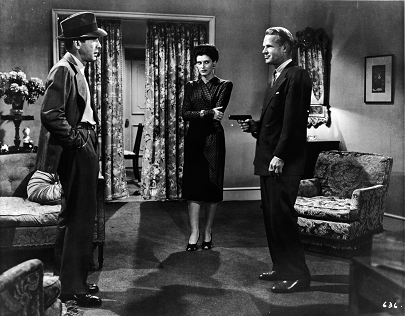
Okay, one more guy making rules! This is Raymond Chandler's hard-won wisdom on plotting the crime:

1) It must be credibly motivated, both as to the original situation and the dénouement.

2) It must be technically sound as to the methods of murder and detection.

3) It must be realistic in character, setting and atmosphere. It must be about real people in a real world.

4) It must have a sound story value apart from the mystery element: i.e., the investigation itself must be an adventure worth reading.

5) It must have enough essential simplicity to be explained easily when the time comes.

6) It must baffle a reasonably intelligent reader.

7) The solution must seem inevitable once revealed.

8) It must not try to do everything at once. If it is a puzzle story operating in a rather cool, reasonable atmosphere, it cannot also be a violent adventure or a passionate romance.

9) It must punish the criminal in one way or another, not necessarily by operation of the law…. If the detective fails to resolve the consequences of the crime, the story is an unresolved chord and leaves irritation behind it.

10) It must be honest with the reader.


And then, just for fun, some great Chandler quips (no, not the Chandler from Friends. This is the one he's probably named for): 

The French have a phrase for it. The bastards have a phrase for everything and they are always right. To say goodbye is to die a little.
  - The Long Goodbye

From 30 feet away she looked like a lot of class. From 10 feet away she looked like something made up to be seen from 30 feet away.
- The High Window

Dead men are heavier than broken hearts.
– The Big Sleep

I needed a drink, I needed a lot of life insurance, I needed a vacation, I needed a home in the country. What I had was a coat, a hat and a gun. I put them on and went out of the room.- Farewell, My Lovely

She gave me a smile I could feel in my hip pocket.
- Farewell, My Lovely

I'm an occasional drinker, the kind of guy who goes out for a beer and wakes up in Singapore with a full beard.
- Philip Marlowe’s Guide To Life

Some days I feel like playing it smooth. Some days I feel like playing it like a waffle iron. - Trouble Is My Business

She smelled the way the Taj Mahal looks by moonlight.
- The Little Sister

I knew one thing: as soon as anyone said you didn’t need a gun, you’d better take one along that worked. - The Long Goodbye


Hard-bitten. Hard-won. Heart-broke wisdom. 


S.S. Van Dine's 20 Rules for Detective Stories


THE DETECTIVE story is a kind of intellectual game. It is more — it is a sporting event. And for the writing of detective stories there are very definite laws — unwritten, perhaps, but none the less binding; and every respectable and self-respecting concocter of literary mysteries lives up to them. Herewith, then, is a sort Credo, based partly on the practice of all the great writers of detective stories, and partly on the promptings of the honest author’s inner conscience. To wit:

1. The reader must have equal opportunity with the detective for solving the mystery. All clues must be plainly stated and described.

2. No willful tricks or deceptions may be placed on the reader other than those played legitimately by the criminal on the detective himself.

3. There must be no love interest. The business in hand is to bring a criminal to the bar of justice, not to bring a lovelorn couple to the hymeneal altar.

4. The detective himself, or one of the official investigators, should never turn out to be the culprit. This is bald trickery, on a par with offering some one a bright penny for a five-dollar gold piece. It’s false pretenses.

5. The culprit must be determined by logical deductions — not by accident or coincidence or unmotivated confession. To solve a criminal problem in this latter fashion is like sending the reader on a deliberate wild-goose chase, and then telling him, after he has failed, that you had the object of his search up your sleeve all the time. Such an author is no better than a practical joker.

6. The detective novel must have a detective in it; and a detective is not a detective unless he detects. His function is to gather clues that will eventually lead to the person who did the dirty work in the first chapter; and if the detective does not reach his conclusions through an analysis of those clues, he has no more solved his problem than the schoolboy who gets his answer out of the back of the arithmetic.

7. There simply must be a corpse in a detective novel, and the deader the corpse the better. No lesser crime than murder will suffice. Three hundred pages is far too much pother for a crime other than murder. After all, the reader’s trouble and expenditure of energy must be rewarded.

8. The problem of the crime must he solved by strictly naturalistic means. Such methods for learning the truth as slate-writing, ouija-boards, mind-reading, spiritualistic se’ances, crystal-gazing, and the like, are taboo. A reader has a chance when matching his wits with a rationalistic detective, but if he must compete with the world of spirits and go chasing about the fourth dimension of metaphysics, he is defeated ab initio.

9. There must be but one detective — that is, but one protagonist of deduction — one deus ex machina. To bring the minds of three or four, or sometimes a gang of detectives to bear on a problem, is not only to disperse the interest and break the direct thread of logic, but to take an unfair advantage of the reader. If there is more than one detective the reader doesn’t know who his codeductor is. It’s like making the reader run a race with a relay team.

10. The culprit must turn out to be a person who has played a more or less prominent part in the story — that is, a person with whom the reader is familiar and in whom he takes an interest.

11. A servant must not be chosen by the author as the culprit. This is begging a noble question. It is a too easy solution. The culprit must be a decidedly worth-while person — one that wouldn’t ordinarily come under suspicion.

12. There must be but one culprit, no matter how many murders are committed. The culprit may, of course, have a minor helper or co-plotter; but the entire onus must rest on one pair of shoulders: the entire indignation of the reader must be permitted to concentrate on a single black nature.

13. Secret societies, camorras, mafias, et al., have no place in a detective story. A fascinating and truly beautiful murder is irremediably spoiled by any such wholesale culpability. To be sure, the murderer in a detective novel should be given a sporting chance; but it is going too far to grant him a secret society to fall back on. No high-class, self-respecting murderer would want such odds.

14. The method of murder, and the means of detecting it, must be be rational and scientific. That is to say, pseudo-science and purely imaginative and speculative devices are not to be tolerated in the roman policier. Once an author soars into the realm of fantasy, in the Jules Verne manner, he is outside the bounds of detective fiction, cavorting in the uncharted reaches of adventure.

15. The truth of the problem must at all times be apparent — provided the reader is shrewd enough to see it. By this I mean that if the reader, after learning the explanation for the crime, should reread the book, he would see that the solution had, in a sense, been staring him in the face-that all the clues really pointed to the culprit — and that, if he had been as clever as the detective, he could have solved the mystery himself without going on to the final chapter. That the clever reader does often thus solve the problem goes without saying.

16. A detective novel should contain no long descriptive passages, no literary dallying with side-issues, no subtly worked-out character analyses, no “atmospheric” preoccupations. such matters have no vital place in a record of crime and deduction. They hold up the action and introduce issues irrelevant to the main purpose, which is to state a problem, analyze it, and bring it to a successful conclusion. To be sure, there must be a sufficient descriptiveness and character delineation to give the novel verisimilitude.

17. A professional criminal must never be shouldered with the guilt of a crime in a detective story. Crimes by housebreakers and bandits are the province of the police departments — not of authors and brilliant amateur detectives. A really fascinating crime is one committed by a pillar of a church, or a spinster noted for her charities.

18. A crime in a detective story must never turn out to be an accident or a suicide. To end an odyssey of sleuthing with such an anti-climax is to hoodwink the trusting and kind-hearted reader.

19. The motives for all crimes in detective stories should be personal. International plottings and war politics belong in a different category of fiction — in secret-service tales, for instance. But a murder story must be kept gemütlich, so to speak. It must reflect the reader’s everyday experiences, and give him a certain outlet for his own repressed desires and emotions.

20. And (to give my Credo an even score of items) I herewith list a few of the devices which no self-respecting detective story writer will now avail himself of. They have been employed too often, and are familiar to all true lovers of literary crime. To use them is a confession of the author’s ineptitude and lack of originality. (a) Determining the identity of the culprit by comparing the butt of a cigarette left at the scene of the crime with the brand smoked by a suspect. (b) The bogus spiritualistic se’ance to frighten the culprit into giving himself away. (c) Forged fingerprints. (d) The dummy-figure alibi. (e) The dog that does not bark and thereby reveals the fact that the intruder is familiar. (f)The final pinning of the crime on a twin, or a relative who looks exactly like the suspected, but innocent, person. (g) The hypodermic syringe and the knockout drops. (h) The commission of the murder in a locked room after the police have actually broken in. (i) The word association test for guilt. (j) The cipher, or code letter, which is eventually unraveled by the sleuth.


If you're interested in "golden-age" detective stories, listen to the Great Detectives of Old Radio podcast, which has restored the old radio dramas of SS. Van Dine. 

https://www.greatdetectives.net/detectives/


http://www.openculture.com/2016/02/20-rules-for-writing-detective-stories.html

Monday, January 17, 2022

Starting with Idea: The Thought-driven Story

 Let's talk today about “idea” as a way to start a story. Some stories, especially those classified as “speculative fiction,” start not with anything concrete like character or setting, but with an idea to be explored.

As science fiction writer Orson Scott Card explains, “Idea stories are about the process of seeking and discovering new information through the eyes of characters who are driven to make the discoveries.”

That’s really the appeal of an idea story. No matter what it turns out to be, it starts as an intellectual puzzle. In the spirit of that sort of intellectual mission, let’s consider some ways an idea can start a story.

Questions. For example, many mysteries start with a scene that presents a question, one of the oldest questions of all, “Whodunnit?” But most authors add some additional complication, like, what could kill a man alone in a locked room? (Edgar Allan Poe’s seminal detective story, “Murders in the Rue Morgue,” was perhaps the first to pose that question.) The point of these “idea-mysteries” is to challenge the intellect of the sleuth (and author and reader) to go beyond the expected and familiar to speculate, innovate, and interrelate clues to come up with possible though unlikely solutions.

What-ifs. This is a specialized question that truly is speculative, as it seeks to imagine something that hasn’t happened (and probably won’t). This is more of an experiment than an exploration. A good recent example is The Martian, which poses the question, “What if an astronaut was left behind on Mars?” A great classic example is Oedipus the King, which asks, “What if the detective learns he’s actually the murderer?”

There’s also a what-if variety that experiments with the past. Alternative histories like Harry Turtledove’s The Great War inspire the author and reader to consider how the present might be changed if an important past event were changed. These alternative histories have a point beyond the mere alteration, however. Philip K. Dick’s “Man in the High Castle” takes the question “What if the Nazis had taken over the United States?” to pose the deeper question, “Would Americans resist?”

Themes. A theme is a message, a “moral to the story,” that can usually be stated in a sentence, but is better developed through story events. The film Chinatown, for example, uses the “water wars” of southern California to explore the theme of “Absolute power corrupts absolutely.”

The difficult task in theme-based stories is to avoid being preachy. I’d suggest having the theme in mind and creating characters who have to discover that truth, but only at the END of the story. That way, the theme evolution will be a more organic process.

Perspective. A perspective-based story requires, you guessed it, an alteration of perspective, demonstrating that what you see is dictated partly by where you’re seeing from. Charles Dickens’s A Tale of Two Cities juxtaposes the experience of the French Revolution in Paris with that of London, that of a victim with that of an observer. A variation of this perspective-test is the “fish out of water” plot, where our world is viewed through the eyes of an alien or stranger.

In my opinion, this is one of the most socially important genres, as it forces our notoriously solipsistic species to examine ourselves objectively—something more and more essential in a diverse culture.

Concepts. A concept is the simplest and yet most profound of ideas, often expressed in a single word— Freedom. Dispossession. Exile. The speculative aspect of this comes from recognizing that simple concepts are actually the opposite of simple and that only a story and a character can truly portray the complexities. For example, the film Casablanca explores the concept of “neutrality” through the cynical and detached character of Rick, a symbol of the isolationist United States trying to stay isolated in those dark months before Pearl Harbor.

Starting with the concept but developing it through the complications of a 3-D person within a culture is a good way to avoid the sort of closed system that readers of speculative fiction loathe.

Twists. This story takes something conventional and twists it to produce something both familiar and exotic. You’ll often see this in novels aimed at teens and pre-teens, as connecting the normal with the unusual trains them in the important mental skill of skepticism and imagination.

The trick here is to make the base story perfectly plausible (Harry Potter really is going to boarding school and taking courses, but they’re about incantations and potions), so that the twist is more fun, making the familiar unfamiliar.

All of these idea types pose the risk of becoming just tricks. To avoid that risk, consider that each of these should lead to a deeper question, and that is in the end what we want to explore in the story.

When I read Ender’s Game, for example, the "twist" is clear-- (spoiler warning) the children thought they were training on a videogame to stop an alien invasion, but in the end, it turns out the game was real and they'd just stopped the invasion. But I found the deeper question to be, “Why do we sacrifice our children for war?” That deeper question leads to the plot development that the adults deceive the children that war is just a game.

Another way to make an idea into a full-fledged story is to embody the idea inside a character’s journey. Ask yourself who needs to learn this theme or experience this twist? Oedipus, for example, is an arrogant man who will not accept the power of the gods over him. So he has to be forcibly confronted with the fact that they control his fate.

The most successful idea stories start with an idea… but they don’t end there. The idea is more than just a statement or speculation, but rather a process whereby the reader and characters experience the idea and come to understand what it really means.


Thursday, October 15, 2020

Complicated questions for sophisticated writers: Short Stories- how do you make them SHORT!


I just did a “Plot Finish Fest” day (6 very intense hours!) with a group of plotters. This is a bonus available to writers who enroll in my Plot Blueprint Course.  For each story, we worked through the three acts and then the nine turning points of the plot-- just in time to start drafting the scenes in NaNoWrimo (National Novel Writing Month).

When writers with different types of stories interact, we often have to adjust our brainstorming for “medium”— whether a novel or a short story or a TV script or whatever new form will rise up next. In the last month, I’ve worked with writers working on projects as varied as a 1-act play (a musical!) and a novel that could be adapted for a Netflix series.

Marshall McLuhan famously said, “The medium is the message.” And that was before the Internet, where the medium has become the message, the messenger, and the messaged all at the same time. Well, when it comes to plots, I don’t think the medium IS the message necessarily, but it certainly AFFECTS the message.

One of the plotters, Vikk, was discussing an old standard medium—the short story.  How does a “natural novelist”—used to plotting in three acts for 300 pages or so—compress the plot down to 15-50 pages? Or do you instead compress the message—chart just a segment of a character journey, explore a smaller conflict? Or do you focus  on deeply describing a moment, a slice of life, rather than a sequence of events?

I had a few thoughts—fairly random—about one way to make stories short.

I think a short story will not just be compressed plotwise. In some cases, the plot might have to be smaller, less complex-- a shorter journey from beginning to end. I think of an episode of a TV show rather than a season-- it's complete in itself, but just has one main incident or problem that can be dealt with more quickly.

But I’m more drawn right now to the conflict or problem that can be experienced and resolved in just a day or two.  An example is the Roddy Doyle short story Life without Children, about a man travelling on business during the quarantine. This gave me a good sense of compressing the "problem" in a short story. His protagonist starts out by answering "no" when he's asked if he has children. In fact, he does have children, and a wife too. And he's not sure why he lied, but it makes him feel liberated. And pretty soon he's deciding he's going to quit his life-- throw away his phone, disappear, be free!

He  starts planning his escape, and he does throw away his phone. And then in the end, after flirting with the idea, he gets a new flight and texts his wife from his tablet and decides to go home.

That is, the problem is that he feels trapped and old and disheartened, and just entertaining the idea that he could escape lets him feel relieved, and he can resume his life. The problem is resolved in a way that doesn't need a lot of events—just the set up of the problem, and then the decisive event, and the aftermath.

In this case, the “shortening” comes in a shorter distance between problem and resolution.

 This was of immediate interest to me, because during NaNo month, I want to experiment with writing interrelated short stories. They’d all be set in the same place and (I hope) combine to create the story of a town under the shadow of a curse. Each would involve a different character, and perhaps only peripherally involve the curse and only marginally advance the big plot. I’m hoping the ‘scatter-stories’ will create almost a collage, but one with a narrative thrust. And I think probably they might not all be “short” in the same way. Maybe one will be just a compressed novella, and another will be a slice-of-life, and another will just follow as the character comes to a realization…. Well, we’ll see! But I’m excited at the prospect of narrowing my focus and plunging in every day to something new—a new story each day.
What do you think? If you write short fiction, how do you get it all done in so few pages?

Would anyone be interested in mutual support for NaNoWrimo? Here’s a Facebook group where a few of us will be doing writing sprints and sharing encouragement. We’ll have fun!
 
Alicia


Friday, September 21, 2018

Three Acts: Three "Things' That Can Increase the Coherence of Your Conflict

 Try this exercise if you're afraid your conflict is lagging!

This uses the 3-act Structure to organize your plot events into setup, rising conflict, resolution, and that structure provides propulsion and the progression of events within the story arc. Willy-nilly eventing won't build up the dramatic power that intensifies the emotion.  In fact, effective plotting is all about cause and effect. Events matter because they cause something else to happen and something to change and the characters to feel. The accumulation of events is what propels the reader to read on, and organizing this cause/effect sequence into acts will help you build tension and cause change.

Three Acts:
Act 1 -- Set up conflict.
Act 2 -- Make conflict rise.
Act 3 -- Make conflict explode, and then resolve it.


Try breaking these acts into 3 big events of ascending emotional risk: Examples-
3 times she needed help
3 times he got stuck
3 attempts to deal with the conflict
3 attempts to reach the goal
3 heartbreaks
3 secrets
3 lies
3 failures
3 betrayals
3 times she didn't ask for help

Just try it-- ascending risk, remember!
Then consider: What are the risks he/she is afraid of?
Why is this a risk?
What might this risk cause, and what might be caused by their trying to AVOID the risk?

THREE ACTS. THREE SECRETS.
For example, let's take one that is just full of emotion-- secrets. Three secrets.
Kept or revealed? Or both? Maybe the attempt to keep a secret leads to revelation.
Let's think of ascending risk --
Act 1: This sets up the first secret. She's an FBI agent, and she's sent undercover into a small town. So the first secret is that she's secretly an FBI agent.
There's not a lot of emotional risk in this secret because it's her job. But it sets in motion all the rest of the risks.
What does this cause? It causes her to be placed in this small town to investigate the local bank, and it causes her to have to take on a disguise—she's pretending to be a bank teller.

Act 2: The next secret comes when she meets and is drawn to the son of the bank president. This is just the sort of guy she despised when she was growing up, rich and polished and educated. But she's supposed to investigate his father, and she's supposed to be a bank teller who would be flattered by his intentions, so she has to keep the secret from him about who she is... and the secret from her boss that she's falling in love with one of the "targets".
What does this cause? She's getting deeper entrenched into deception. It's going to be far, far worse now when her secret is revealed. She's also becoming alienated from her job, from her old self, from the FBI, as she's not reporting her contact with Junior. Maybe she's even started lying to her boss, withholding information that could get Junior in trouble.

Act 3: What's the final secret? It's probably her real identity, not just FBI, but her former identity. Maybe she's never told anyone that she grew up as "trailer trash," the daughter of a small-town prostitute or drug dealer. Her final secret is her shame, which has caused her all along to hide her past and her true self, to cut herself off from her old friends and her family, maybe even to make up a more generic and acceptable past.
(The big task would be—and I'm too brain-dead now to come up with an idea!—make the revelation of that secret in the start of Act 3 happen and affect the plot.)
REMEMBER TO TRY AND ASSEMBLE THIS IN "ASCENDING ORDER OF EMOTIONAL RISK." THE RISK OF THE LAST SHOULD BE THE GREATEST RISK TO THE CHARACTER'S EMOTIONAL SECURITY. SO IN THIS CASE, WE'RE SEEING THAT THE BIGGEST SECRET IS HER PAST, AND THE GREATEST DANGER IS SHAME.

Let's try another "Three Acts, Three Somethings."
Remember the film Casablanca? Rick is a symbol of the United States before Pearl Harbor, isolated, uninvolved, as the world crashes around him.
This is a tightly plotted story, and there are several "3 things", but the one I like to focus on is "Three Times Rick Refuses To Help." (Tip: To determine “ascending risk,” you want to ask after each of the 3 things: What is the risk? What does this cause?)

Act 1: Ugarte asks Rick for 2 things—to hold the letters of transit for the evening (he agrees), and later to help him escape from the police (Rick refuses this time).

What is the risk? There's some emotional risk from refusing to help—a few hours later, he drunkenly refers to it—but he can shrug it off as kind of a cost of doing business—sometimes, to run a successful saloon, you have to sacrifice a friend.

What does this cause? It's very important externally because with Ugarte dead, Rick is now stuck with these letters of transit, and as he says drily, "As long as I have them, I'll never be lonely." (I tell you, this film is SO well-written, because in fact, he is alone, and his loneliness is ended only because he has those damned letters of transit!)
--

Act 2: The news of his having the letters spreads, and he's approached by Victor Laszlo, a Resistance leader who will be arrested by the Gestapo if he can't get out of Casablanca. When L offers to buy the letters (which will get him and his wife to safety—do NOT ask why! Because, that's why. These are magic letters :), Rick refuses, and when asked why, says bitterly, "Ask your wife."

Much more emotional risk here! In refusing to help, he is acknowledging that the wife (Ilsa) hurt him earlier, and he's using this as a means of revenge. His hard-won isolationist wall is beginning to crumble. Also, weirdly, he's sort of letting himself hope that Laszlo will find out about the earlier affair and cast Ilsa out so that she will come to Rick again.

What does this cause? Well, one effect is, paradoxically, to reconcile Laszlo and Ilsa. She's been keeping the secret of the former affair (she'd thought L was dead), and this actually lets Laszlo understand what happened and gently indicate that he doesn't blame her. (This becomes a huge part of her conflict, actually, as she realizes she still loves both of them.)
For Rick, this causes him to get more and more involved in Ilsa's dire situation and make it that much clearer that he's still in love with her.
--

Act 3: Ilsa herself comes to him and asks for—no, demands—the letters of transit to save Laszlo so he can continue to fight the Nazis. She is so determined that she pulls a gun on him, and he is so determined to refuse to help her, that he invites her to shoot him. Rather than help her, he will commit suicide! Talk about emotional risk. Helping her would be worse than dying?
(She as always ends up acting with love, putting the gun down and confessing that she still loves him, and he ends up embracing her—this is one of the greatest scenes in the history of film.)
What is the risk? That he will fall in love with her again (as he does), that he will lose all his defenses, that he will be hurt again, that he will lose her. This ALL happens. (That is, sometimes the greatest emotional risk should explode.)

What does this cause? Rick’s refusal causes her to confess her love, and that leads to their tacit decision to use the letters of transit. But here's the amazing thing. Ilsa says to him, "You'll decide what's right? For all of us?" That is, she is telling him that whatever he decides to do, he has to help Laszlo to safety. (She assumes that he will give Laszlo one letter of transit, and she and Rick will escape together some other way. And you know what happens, or if you don't, go watch the film!!!!!)
The real result is Rick's return to the family of man, actually. He accepts responsibility for other people, and joins the war effort. He gives up his isolation and accepts the power of love.

Notice that a powerful place to put 'the thing' is close to the end of the act, so that its repercussions propel into the next act.

So look at your own story, and see if you can identify "Three Things", or invent them, and center each act upon this thing.
1. What is the "thing" in "Three Things" in your story? If you'd like to speculate about what this means, how it relates to a deep internal issue or theme (like Rick's refusal to help is an aspect of his fear of getting too involved again and getting hurt), have at it.

2. Where can you put some manifestation of "this thing" in each act?
For each occurrence, ask:
    a. What is the emotional risk here (and remember to assemble these three in ascending risk)?
    b. What does this thing cause to happen?

3. How can this thing near the end of the story (maybe the dark moment?) cause a great emotional change?

Try that. It might mean a bit of re-arranging or intensifying events you already have.

Any examples?  Questions? Ideas?

Alicia  Writing articles

Monday, January 23, 2017

Inconvenient Research Information= Opportunity!

Inconvenient Research Information= Opportunity!

For some reason I decided I had to have a story where my sleuthing couple are at a cricket match and the batter gets "beaned" by the ball. Only it's not a ball, it's a meteorite.

No prob! Of course, I know nothing about cricket or meteors either! But that's what Google is for. And when Google fails, someone within my husband's wide acquaintance can always step up. (He knows all sorts of interesting people because he's been the program chair of Scientech, a lifelong-education organization composed muchly of retired engineers and physicians.

Okay, I'll be honest here. It wasn't that Google FAILED, precisely, but it gave me information that seemed to make my scene impossible. To wit: Many meteorites fall to earth every year, but almost none (like two in the history of the world, as far as we know) have hit humans. Also, a meteorite falling on someone's head would pretty much obliterate him, because it's fallen a very long way and very fast. Shoot! I can't kill off a kid in a cricket game with his parents watching! And anyway, this is supposed to be a romantic novella, and Natasha and Matt are unlikely to be feeling much like cuddling if they just saw a death. 

But I persevere. It's not a problem, it's an opportunity! I realized I needed to write around these inconvenient research facts. First, of course, I turned to the higher source, Jeff's buddy the astronomer. He gave more inconvenient information, but the facts were more nuanced, a lot of "it depends." And I could work around by manipulating the options "it depends" gave me.
So while it will cause some adjustments in the sequence, it's still all feasible. Of course, plausibility is still an issue, but really, this would be a one-in-a-billion event in the best of situations. People really don't get hit by meteors very often! But they COULD be-- if it's ever happened, it can happen again, right? And fiction is about the unusual, right? That's why we get to make it up. So my cricket-playing youth turns out to be the THIRD person ever to be hit by a meteorite. Talk about wrong place/wrong time.

So anyway, Kurt said that they are usually 2-3 inches in diameter (which is fine), would come down almost perpendicular to the ground (a bit of a problem, given that kid-obliteration issue), and would probably be 800 degrees hot or so (but could be much hotter). However, my meteorite (yes, it's MINE! :) could be touchable in an hour depending on the material. (I love "depending on" because that means I have some leeway and it's still legal.)

What's fun is to work the scene around those requirements. I don't want the meteorite to hit the kid on the top of the head (perpendicular descent), but I could have it hit something else first and ricochet. So I can have that something be a tree, which it splits or breaks. That impact would diminish the velocity to a less lethal level and could also change the trajectory, so it's now moving horizontally and could just glance off the youth's temple rather than, you know, obliterating him.

As for the super-heatedness, also a obstacle/opportunity! I'd planned to have Natasha send the children to look for the object that hit the tree and kid, and her niece was going to bring it back. But now I'm going to have Dorie try to pick it up and cry out because it's still hot (I can make it be about 20 minutes after the impact), and Natasha will then have to join her and pick it up with her glove and maybe some leaves from the broken tree. That makes for more character interaction with each other and the object, and also that little minor bit of conflict that makes a scene more fun to read.
Research Obstacle = Plot Opportunity.
Anyway, I wanted to report back on this momentous issue! And seriously, everyone, watch out. 18,000 to 84,000 meteorites hit Earth every year, and your head could be in the way! (Source is here.) One more thing we have to worry about! (NOT.)
Hey, sign up here and you can get instant access to my new e-book, 13 Prime Principles of Plot.

Get free book here!

Thursday, January 7, 2016

The Call to Action: Some Strategies to Make It Big

The Call to Action: Some Strategies to Make It Big  
I was discussing a friend's manuscript, and I suggested she pump up the "call to action." That's usually in the first chapters, and is where the protagonist is given the incentive to act. It doesn't have to be a big high-stakes event, or some insistent demand, but I think a good "call to action" (Vogler calls it the "call to adventure," which is more intriguing!) can entice the reader to keep reading and also launch the story into the second act of rising action.
Sometimes the call is rendered a bit too subtly to provide enough motivation for the protagonist to get off her duff and get moving.  However, we don't necessarily need a Wizard of Oz style tornado call to action. It can seem minor and become more important later, or actually be minor but end up dragging the character deeper and deeper into danger. Point is, whatever the incentive is, it should be enough to motivate the character out of her routine and into doing something.

I came up with a few suggestions that might help power up the call, and give the reader a clue that conflict will be heating up.

1) Make it matter to the protagonist.  The main character is usually our surrogate in the story, so it has to matter to him/her for us to feel that it's important. I was just reading a pretty good book, a police procedural, that could have benefited from a stronger call to action.  The detective saw the central crime as just another murder of the 20 or so he investigates a year. There wasn't anything special about this murder, at least as far as he was concerned, and his "just a job" attitude made it easy not to get really invested in the conflict.

So what's different about this conflict event? Why is it a "call to action" that's more imperative than "get to work on time?" How can you show that either when the event is initiated, or as the character gets more involved?

2) Place it early. Don't make the reader wait too long. The call to action is the signal to the reader that the plot is getting underway. But it's also the event that tells the character to do something, to get started on the goal or overcoming the obstacles. In the classical dramatic schema, it's the end of the setup and the beginning of Act II. It means things are changing.
Even if you want to ease into the conflict-- it seems like just another murder at first-- think of having some little signal that this particular one is just a bit different, like the police commissioner calls right after the body is discovered in Chapter 1, oh so casually, to ask who caught the case. That way, when the victim is revealed in Chapter 3 to be the commissioner's mistress, the reader will experience a certain glee-- aha! I knew something was up!

3) Make it new. The police procedural never really overcame the "just another job" problem you see often in books where the protagonist's job is taking care of this problem. The call to action might SEEM routine-- just another murder for the homicide detective!-- but think about how you can pretty quickly make it more than just another job. Maybe the victim is the mayor's college roommate, or the evidence points to the police chief, or the modus operandi reminds an old-timer in the department of an unsolved murder, or.... What's different about this event? How is it not just routine? How can you show that early enough that the reader's attention doesn't wander off?

4) Make it demand some action. The "call to action" means the protagonist should act or react because of this, and not just the usual or routine (opening a file, stopping at the bank). What does the protagonist have to do in response to this event that's different than usual? Maybe he agrees to call the police commissioner back after the autopsy. Maybe he stays late to wait for a call from the Pacific Time parents about their daughter, and so misses the pickup at his kids' daycare center and gets into trouble with his ex-wife.  Or he has to call her at 5 pm and ask her to do the pick-up, even though it breaks his heart to hear her voice. The call to action should quickly disrupt this person's life and call for some unusual activity.

5) Use scene placement to show that however negligible this might seem, it's actually important. Anything placed at the end or beginning of a scene gains importance just from the position, from the pause that comes before or after, and from the sense that all builds up to this event or ripples from it.  So put it at the end of the first or second scene, or the end of the first chapter, and you'll give it some subtle emphasis.

6) Use another character to elicit some notion of "specialness".  The police commissioner is elaborately casual in his inquiry... too casual. The ex-wife remarks that the detective has always picked the kids up-- what's wrong?  The detective's partner passing by the desk picks up the file and mentions that this is the third "Brittany" killed this year-- weird, huh?

7) Don't be too gradual. This is my mistake every time. I think I want to make it entirely plausible, completely logical, and so I spend three scenes carefully setting up the interlocking clues that This Is Special. (I also keep telling myself to "bury" the big clues in the middle of other clues, so I have to create all those other clues, hence more scene detail, more scenes.) In the first scene, maybe the detective notices her charm bracelet. In the second, he has to call her parents to tell them that she's dead, and they weepingly tell him that she had a new boyfriend, someone important. In the third scene... you get the idea.  By the time the reader has carefully picked through the minefield of event, clue, detail, I might have lost her interest.
Stack.  Get more than one big moment into the "call to action" scene.  Start with the charm bracelet, have him call the parents, let the partner notice something-- all in one scene. Let the small event build into the larger revelation or realization that.... "this is different!"

8) Show the change soon. Again, don't be too gradual in the opening. (I think in the middle of the plot, you can probably take things more slowly and meticulously, but in the opening, you want to get underway.)  The call to action changes things not three scenes later, but right now. If you can make the change clearly a result of his taking this unprecedented action, all the better. As soon as he agrees to keep the commissioner informed, he gets caught up-- the commissioner is "casually" calling him the very next morning.

9) Show the character having to change-- that is, how does this skein of events make his actions and/or attitude different right away?  For example, he might be sort of flattered that the police commissioner is paying attention to him, but he knows that his captain won't approve, so when the commissioner calls, he lowers his voice and takes the phone into the hall so no one, not even his trusted partner, overhears.

10) Let this call to action open to a new world or a new opportunity.  Say the police commissioner is grateful to be kept informed, and invites the detective to his club where the mayor and the judges hang out. Or the trail of clues leads to Los Angeles and he has to board a flight and leave the frozen Midwest for the beach.

11) Notice what you set up in the call to action scene and use that later in the book, to deepen characterization or develop new conflict.  If you want him to get back together with his ex-wife, for example, in the end, how can you let the call to action and aftermath set that up? Like instead of just abandoning the kids at daycare (not conducive to later getting back with ex!), he uses this as an opportunity to call her, get her to do the pickup, and... this is the important thing... promise her in exchange a nice dinner out. That last in the chain of actions will set up the much later "date" that resolves the romantic conflict.

Again, you're in control here. You're the one who determines what the event is, and how it first appears. You can turn up or down the emphasis. You can move the initiating event earlier or later. You can use dramatic or understated prose. You can select detail that adds to the suspense or narrows the focus. You can show the ripples of the event on the character's life and the setting.  Challenge yourself to use the tools you've got to make this event a real call to action, for the reader as well as the character.

Alicia

Wednesday, January 6, 2016

Three Acts: Three "Things' That Can Increase the Coherence of Your Conflict

 Try this exercise if you're afraid your conflict is lagging!

This uses the 3-act Structure to organize your plot events into setup, rising conflict, resolution, and that structure provides propulsion and the progression of events within the story arc. Willy-nilly eventing won't build up the dramatic power that intensifies the emotion.  In fact, effective plotting is all about cause and effect. Events matter because they cause something else to happen and something to change and the characters to feel. The accumulation of events is what propels the reader to read on, and organizing this cause/effect sequence into acts will help you build tension and cause change.

Three Acts:
Act 1 -- Set up conflict.
Act 2 -- Make conflict rise.
Act 3 -- Make conflict explode, and then resolve it.


Try breaking these acts into 3 big events of ascending emotional risk: Examples-
3 times she needed help
3 times he got stuck
3 attempts to deal with the conflict
3 attempts to reach the goal
3 heartbreaks
3 secrets
3 lies
3 failures
3 betrayals
3 times she didn't ask for help

Just try it-- ascending risk, remember!
Then consider: What are the risks he/she is afraid of?
Why is this a risk?
What might this risk cause, and what might be caused by their trying to AVOID the risk?

THREE ACTS. THREE SECRETS.
For example, let's take one that is just full of emotion-- secrets. Three secrets.
Kept or revealed? Or both? Maybe the attempt to keep a secret leads to revelation.
Let's think of ascending risk --
Act 1: This sets up the first secret. She's an FBI agent, and she's sent undercover into a small town. So the first secret is that she's secretly an FBI agent.
There's not a lot of emotional risk in this secret because it's her job. But it sets in motion all the rest of the risks.
What does this cause? It causes her to be placed in this small town to investigate the local bank, and it causes her to have to take on a disguise—she's pretending to be a bank teller.

Act 2: The next secret comes when she meets and is drawn to the son of the bank president. This is just the sort of guy she despised when she was growing up, rich and polished and educated. But she's supposed to investigate his father, and she's supposed to be a bank teller who would be flattered by his intentions, so she has to keep the secret from him about who she is... and the secret from her boss that she's falling in love with one of the "targets".
What does this cause? She's getting deeper entrenched into deception. It's going to be far, far worse now when her secret is revealed. She's also becoming alienated from her job, from her old self, from the FBI, as she's not reporting her contact with Junior. Maybe she's even started lying to her boss, withholding information that could get Junior in trouble.

Act 3: What's the final secret? It's probably her real identity, not just FBI, but her former identity. Maybe she's never told anyone that she grew up as "trailer trash," the daughter of a small-town prostitute or drug dealer. Her final secret is her shame, which has caused her all along to hide her past and her true self, to cut herself off from her old friends and her family, maybe even to make up a more generic and acceptable past.
(The big task would be—and I'm too brain-dead now to come up with an idea!—make the revelation of that secret in the start of Act 3 happen and affect the plot.)
REMEMBER TO TRY AND ASSEMBLE THIS IN "ASCENDING ORDER OF EMOTIONAL RISK." THE RISK OF THE LAST SHOULD BE THE GREATEST RISK TO THE CHARACTER'S EMOTIONAL SECURITY. SO IN THIS CASE, WE'RE SEEING THAT THE BIGGEST SECRET IS HER PAST, AND THE GREATEST DANGER IS SHAME.

Let's try another "Three Acts, Three Somethings."
Remember the film Casablanca? Rick is a symbol of the United States before Pearl Harbor, isolated, uninvolved, as the world crashes around him.
This is a tightly plotted story, and there are several "3 things", but the one I like to focus on is "Three Times Rick Refuses To Help." (Tip: To determine “ascending risk,” you want to ask after each of the 3 things: What is the risk? What does this cause?)

Act 1: Ugarte asks Rick for 2 things—to hold the letters of transit for the evening (he agrees), and later to help him escape from the police (Rick refuses this time).
What is the risk? There's some emotional risk from refusing to help—a few hours later, he drunkenly refers to it—but he can shrug it off as kind of a cost of doing business—sometimes, to run a successful saloon, you have to sacrifice a friend.
What does this cause? It's very important externally because with Ugarte dead, Rick is now stuck with these letters of transit, and as he says drily, "As long as I have them, I'll never be lonely." (I tell you, this film is SO well-written, because in fact, he is alone, and his loneliness is ended only because he has those damned letters of transit!)

Act 2: The news of his having the letters spreads, and he's approached by Victor Laszlo, a Resistance leader who will be arrested by the Gestapo if he can't get out of Casablanca. When L offers to buy the letters (which will get him and his wife to safety—do NOT ask why! Because, that's why. These are magic letters :), Rick refuses, and when asked why, says bitterly, "Ask your wife."
Much more emotional risk here! In refusing to help, he is acknowledging that the wife (Ilsa) hurt him earlier, and he's using this as a means of revenge. His hard-won isolationist wall is beginning to crumble. Also, weirdly, he's sort of letting himself hope that Laszlo will find out about the earlier affair and cast Ilsa out so that she will come to Rick again.
What does this cause? Well, one effect is, paradoxically, to reconcile Laszlo and Ilsa. She's been keeping the secret of the former affair (she'd thought L was dead), and this actually lets Laszlo understand what happened and gently indicate that he doesn't blame her. (This becomes a huge part of her conflict, actually, as she realizes she still loves both of them.)
For Rick, this causes him to get more and more involved in Ilsa's dire situation and make it that much clearer that he's still in love with her.

Act 3: Ilsa herself comes to him and asks for—no, demands—the letters of transit to save Laszlo so he can continue to fight the Nazis. She is so determined that she pulls a gun on him, and he is so determined to refuse to help her, that he invites her to shoot him. Rather than help her, he will commit suicide! Talk about emotional risk. Helping her would be worse than dying?
(She as always ends up acting with love, putting the gun down and confessing that she still loves him, and he ends up embracing her—this is one of the greatest scenes in the history of film.)
What is the risk? That he will fall in love with her again (as he does), that he will lose all his defenses, that he will be hurt again, that he will lose her. This ALL happens. (That is, sometimes the greatest emotional risk should explode.)
What does this cause? Rick’s refusal causes her to confess her love, and that leads to their tacit decision to use the letters of transit. But here's the amazing thing. Ilsa says to him, "You'll decide what's right? For all of us?" That is, she is telling him that whatever he decides to do, he has to help Laszlo to safety. (She assumes that he will give Laszlo one letter of transit, and she and Rick will escape together some other way. And you know what happens, or if you don't, go watch the film!!!!!)
The real result is Rick's return to the family of man, actually. He accepts responsibility for other people, and joins the war effort. He gives up his isolation and accepts the power of love.

Notice that a powerful place to put 'the thing' is close to the end of the act, so that its repercussions propel into the next act.

So look at your own story, and see if you can identify "Three Things", or invent them, and center each act upon this thing.
1. What is the "thing" in "Three Things" in your story? If you'd like to speculate about what this means, how it relates to a deep internal issue or theme (like Rick's refusal to help is an aspect of his fear of getting too involved again and getting hurt), have at it.

2. Where can you put some manifestation of "this thing" in each act?
For each occurrence, ask:
    a. What is the emotional risk here (and remember to assemble these three in ascending risk)?
    b. What does this thing cause to happen?

3. How can this thing near the end of the story (maybe the dark moment?) cause a great emotional change?

Tuesday, November 24, 2015

I'm trying to (finally) re-start the website, so I thought maybe I'd start up the blog too. (Pause for cheers. Pause. Pause.... Cheers, please?)

Have recently been interested in looking for ways to braid the internal or interactional plots into the external plot (or reverse).
Terms:
Plot (an important sequence of events and changes that starts very early in the story and ends late in the story, that is, not a subplot, which will start later and probably resolve earlier and be less than central).
Most common main types of plots:
  1. Internal plot (how the main character changes or confronts some emotional/psychological/life issue during the story)
  2. Interactional plot (how the main character's relationship- including possibly romance- with another character or group-- like family-- changes in the course of the story)
  3. External plot (how the main character-s confront and resolve or fail to resolve some external problem in the course of the story)

Not all stories have all three of these plots, and some stories will relegate one or two of them to "subplot status (like when the protagonist frees the hostages, and along the way, decides he will go ahead and attend the family Thanksgiving after all).

But if we have two of these or all three, we generally "braid" them in some way so that the reader can experience them together, if not in every scene, then in most scenes. In that way, the events of one plot affect the next event of another plot. Example: She's about to leave for the airport when her mom calls and begs her to come home for Thanksgiving, that Dad promises to behave and not bring up the past this time. She is upset by this and misses her plane, and when it leaves without her, she realizes that her luggage is on it, including the jewelry she was supposed to deliver to Mr. Big.

Etc. That is, each plot affects the other in some way-- not just once, but over and over in the story. This should be not like parallel train tracks, but more like a braid, then.
NOT:


The plots don't run parallel to each other, but are braided, intersecting in almost every scene.


An example I just saw was in Granite Flats, an absurdly fun mystery series set in 1962, where three pre-teens solve mysteries (including big international spy dramas) while negotiating early adolescence.

Both of the boys are sort of in pre-teen love with the girl Madeline. But she finds herself liking Tim. In one scene, for mystery-plot reasons, she and Tim trick the bank into giving them access to a safe-deposit box (where they find something significant-- you can tell which plot intrigues me the most, as I recall every glance between them, but not the point of the external mystery).
Their parents find out about this deception, and (correctly) assume neither would have done this alone-- that it's the pairing of the two kids which lead them into bank robbery.
So in the next scene, the parents ban them from seeing each other (much misery ensues, including Romeo and Juliet references-- they're studying that in English class).

So the external event of finding the clue in the safe deposit box leads to an interactional consequence -- their incipient romance is stifled (though of course, in the way of teen romance everywhere, restriction only makes the love more intense... so good!).
The cause-and-effect keeps going on-- because they aren't allowed to speak, their little detective agency goes defunct (and all of this has an effect on Arthur, the other member of their trio). So they cannot pursue the implications of this clue they just found.

What are some more examples of scenes or scene sequences where two (or three) of the plots intersect and cause changes in both? This is such a good technique for making your plot individual (it's not just another mystery, but also a love story), and also for pulling the reader along.

Alicia

Wednesday, October 9, 2013

Reinventing Your Story: Part 1: Why reinvent?

 Why reinvent?
It used to be that you had one chance to sell a book to any given publisher, agent, or customer. If the book you wrote wasn't the book they wanted, well, you took the battered manuscript out of the SASE envelope, sighed, and went back to Writer's Market to find another possible market. (Anyone else remember those days?)

Once in a great while, an editor would send a "revise and resubmit" letter, and you might get another chance... but usually that wouldn't work out as a sale either. Publishers often had pretty strict guidelines for genre books, and no matter what they said about wanting "fresh voices," they really wanted "more of the same, only better." Or they wanted something quite specific, or what they wanted one year they didn't want the next, and if you didn't hit the bull's-eye on just the right day, you were probably out of luck. (I speak from long experience of just barely missing many sales....)

But things are different now. The market has changed so rapidly, we're all scrambling to catch up. And the publishing industry, always so slow to learn from their mistakes, is at least becoming a bit more wary of wholesale and arbitrary rejection. No one wants to be like one of the nine supposedly smart editors who rejected the first Harry Potter book. They are starting -- some of them-- to look beyond and consider what might sell in the long run-- a wonderful series idea, a great imagined world, a compelling voice. An author with one or more of those might be worth talking to, even if the offered book isn't quite right.

Agents too are realizing that the easy sales they had gotten accustomed to aren't so easy anymore, and that their captive clients are feeling more liberated and expecting something more than just another sale to the same old place and the same old contract. Agents have always talked about longterm partnerships with their clients, and some even meant it-- but now that's getting to be a necessity. Authors have other options now, and agents are having to think of ways to make themselves useful, including helping to manage an independent publishing career. In this case, they also will need to consider more intangible aspects of an author's craft, including the ability to self-promote and use social media. Again, the book might not be "just right," but the author might be.

Finally, even those authors who have decided to forego the traditional route and don't have to hit the mark with publishers and agents still might have to face the most discerning of all critics, the reading public. Readers now are much more likely to choose an AUTHOR rather than a single book. (If they like the book, they want more from the author.) But readers can be capricious, turning away from a book because of a single word in the description, or because the book seems too dark or not dark enough or too derivative or too innovative, or… That's one reason they can be so loyal to authors they like, and why they are often willing to take another chance if the "problem" has been fixed.

Problem is -- authors have to find the readers/publishers/agents who will want these books... and sometimes that will require making major changes in a book with an agenda of getting that longterm relationship.
So the good news is: We're getting more second chances!
The bad news is: We have to take advantage of those second chances!
Let's talk about ways to take an existing book and reinvent it to take that second chance.
 Alicia

Reinventing Your Story: Part 2: Types of Reinventing


2: Types of Reinventing

Let's talk a bit about types of reinvention.
There are three big categories, and we can deal with them each in new topics:


1. Reinvent the book. This happens when something has changed and the book that seemed just great no longer works. For example, my last book was written as a women's fiction, but sold as a mystery. Big surprise! The mystery plot was pretty lame. Why? Because I wrote the main plot to be the heroine's life journey to recover from a divorce. Sure, she had to solve her ex's murder along the way, but the big triumphant climax was her getting over her fear of disappointing or losing her son. Cough. I had to beef up the whole mystery thing, put in clues, motivation, suspects. All that stuff mystery novels usually have.


A friend of mine right now is trying to turn an old manuscript aimed at Harlequin (that is, a "category romance") into a "single-title" romance, which means, at minimum, adding in a subplot or two and deepening the interaction with other characters.
Another friend wrote a young adult novel in third person and the publisher likes it... but wants it in first person.
There are, these days, many reasons we might want to perform major surgery on what is a pretty good book (and complete too).


2. Reinvent the author. We used to just have to change our penname, you know, to let go of the baggage associated with our author name! But now, everyone knows that Jane Romance is really Bill Suspense, so it takes more than a name change.


Why would you need to reinvent yourself as an author? First would be after a long series of rejections if you're unpublished. But even published authors might need to start over after a long dry spell, or when the market for their type of book has dropped out, or if they've somehow screwed something up so that readers have started a boycott, or they were caught up in a scandal, or had some serious health issue that derailed them, and "Amy Author" is no longer a good person to be in the intense new publishing world.


3. Reinvent the career. In some ways, this is the adventure of the new millennium. We're all reinventing our careers, whether we want to or not. All the old verities are discarded, and what used to work to make for a great career might not anymore. And all the street savvy you might have picked up along the way might not do much to help you avoid all the new pitfalls.


Reinventing a career might involve discarding an agent or the entire "legacy publishing industry." It might be about changing genres or learning how to navigate social media or how to do your own negotiations. It might mean going from being just an author to being a business. It might mean finding and fixing a brand.


We'll just talk about reinventing the book now. For the moment, what would you say is your current situation? Anyone need/want to reinvent? Are there other categories?